

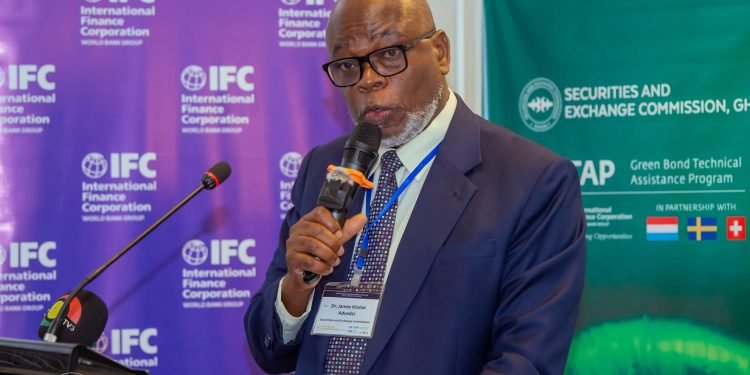
The Securities and Exchange Commission (SEC) Ghana has cautioned the public against unlicensed investment schemes promising extraordinary returns, urging Ghanaians to verify the credentials of investment operators before committing their hard-earned money.
The Director-General of the SEC, James Klutse Avedzi, said financial literacy and informed decision-making were essential to protecting investors from fraud and building long-term financial security.
Speaking at the Bono Regional edition of the Commission’s Time With the SEC investor education programme in Sunyani, Mr Avedzi stressed that the ability to distinguish legitimate investment opportunities from fraudulent schemes had become increasingly important amid the growing use of social media to market financial products.
The programme, held under the theme “Building Financial Confidence for a Brighter Tomorrow,” brought together traditional leaders, students from nursing and other tertiary institutions, security personnel, financial experts, heads of institutions and members of the public.
Mr Avedzi explained that financial literacy was not the preserve of bankers and wealthy investors but a practical life skill needed by everyone who earned, spent or saved money.
“Financial literacy is not a luxury. It is a life skill, and anyone can learn it starting from today,” he said.
He noted that everyday financial decisions, including how much to spend, save and invest, could significantly influence the financial stability of individuals and their families.
According to him, sound financial management went beyond spending less than one earned to include purposeful saving, prudent investment planning and the ability to identify misleading financial offers before they resulted in losses.
The SEC Director-General warned that the growing number of investment offers circulating on WhatsApp, Telegram, TikTok and other digital platforms had created opportunities for fraudsters to exploit unsuspecting members of the public.
He said some schemes used fabricated endorsements, sophisticated promotional materials and artificial intelligence-generated videos to make their offers appear credible, while promising returns of 30 per cent or more every month.
Mr Avedzi urged prospective investors to be wary of guaranteed profits and pressure tactics designed to compel them to invest without conducting proper checks.
“Real confidence means understanding where your money is going, asking the right questions, and walking away when the answers do not hold,” he said.
He outlined three essential habits for investors: verifying whether an investment firm was licensed by the SEC, treating promises of guaranteed high returns with suspicion, and resisting pressure to invest immediately or recruit friends and relatives.
He further advised the public to seek clarification about investment products and their associated risks before making financial commitments.
“If it does not carry a licence from the SEC, walk away,” he cautioned.
The warning comes as the Commission intensifies efforts to improve public understanding of Ghana’s capital market and protect investors against operators who exploit limited financial knowledge.
Beyond the dangers of fraudulent schemes, Mr Avedzi encouraged Ghanaians to develop consistent saving habits and explore legitimate investment opportunities suited to their financial circumstances and long-term goals.
He explained that individuals could begin building wealth through small but regular contributions, provided they understood the products they were investing in and the risks involved.
According to him, investment options available through the capital market include government and corporate bonds, shares and collective investment schemes, each with different levels of risk, potential returns and access to funds.
He explained that bonds generally involve lending money to a government or company in exchange for interest, while shares represent ownership in a company and expose investors to both potential gains and losses depending on the company’s performance.
He also encouraged young people and other prospective investors to take advantage of legitimate investment opportunities available through licensed market operators.
The Bono Regional Minister, who delivered the keynote address, described the investor education programme as timely, stressing that the strength of Ghana’s financial market depended not only on effective regulation but also on the knowledge and responsible conduct of market participants.
He said although investments could help individuals build wealth and support economic development, decisions must be guided by adequate information and a clear understanding of the risks involved.
The minister warned that people who committed money based solely on promises of unusually high returns risked losing their savings to fraudulent investment operators.
He called for stronger collaboration among government institutions, financial institutions, traditional and religious leaders, the media, educational institutions, civil society organisations and individual investors to improve public awareness and strengthen investor protection.
“We need our young people to understand not only how to earn money but also how to save, invest and protect their financial resources,” he said.
The Regional Minister also raised concerns about the growing use of digital platforms to promote investment opportunities, noting that social media had made it possible for fraudulent offers to reach thousands of people within a short period.
He urged the public, particularly young people, not to mistake attractive graphics, testimonials and persuasive advertisements for evidence that an investment scheme was legitimate.
He encouraged prospective investors to establish whether a company or scheme was authorised to operate, examine the terms and conditions and seek answers to questions about the risks before investing.
The Paramount Chief of the Sunyani Traditional Area and President of the Sunyani Traditional Council, Odeefour Ogyeamansan Boahen Korkor II, urged the Securities and Exchange Commission (SEC) to strengthen its monitoring and enforcement mechanisms to clamp down on Ponzi schemes and unlicensed investment operators.
He stressed the need for proactive rather than reactive regulatory interventions to prevent financial losses, protect unsuspecting investors and restore public confidence in Ghana’s investment sector.
The Time With the SEC programme forms part of the Commission’s public education efforts to demystify Ghana’s capital market, improve understanding of investment products and equip citizens with the knowledge needed to make sound financial decisions.
Source: CitiNewsroom
