

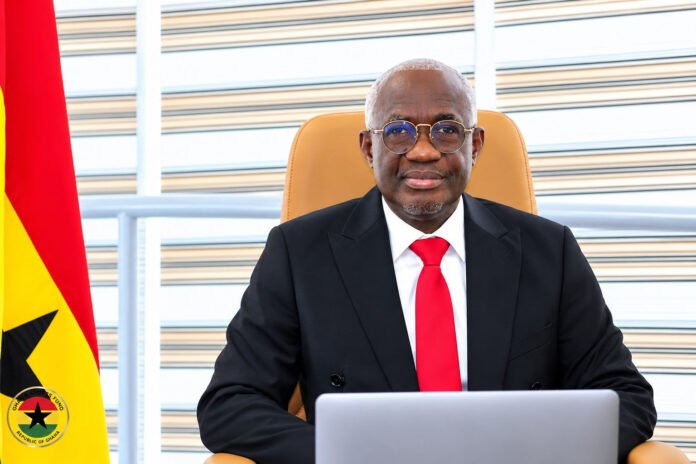
Administrator of the Ghana Sports Fund, Dr David Kofi Wuaku, has urged African countries to prioritise investment in talent development, coaching, academies and sports infrastructure before seeking significant private-sector investment in football.
He said sustainable growth in the football industry would depend on building a strong sporting foundation capable of attracting broadcasters, sponsors and other commercial partners.
Speaking at the Africa Football Business Summit 2026 in Accra, Dr Wuaku said investment must begin with the supply side of the industry, including players, coaches, training facilities and support services that create the product audiences pay to watch.
“A sports economy runs on supply and demand,” he said, stressing that commercial returns would depend on the quality of the sporting product.
He compared the situation to a restaurant that must establish its kitchen before it can serve customers.
Dr Wuaku identified grassroots academies, multipurpose sports facilities, specialist coaching, sports medicine, sports science and professional facility management as key areas requiring investment.
He cautioned against building stadiums and other sports facilities without providing adequate resources for their operation and maintenance, warning that such infrastructure could remain underused and fail to deliver the expected economic benefits.
He also called for greater investment in talent development beyond national and regional capitals, proposing regional sports hubs to identify and nurture promising athletes while serving communities across national borders.
According to him, improved player development and competitive performances would help attract larger audiences, sponsorships and broadcasting deals.
“Without a media stand, they will not come,” he said, highlighting the need for broadcast-ready venues equipped with appropriate facilities, cameras and modern technology.
Dr Wuaku identified limited government leadership in developing the sports ecosystem and investors’ unfamiliarity with the sector as major obstacles to attracting institutional capital.
He called for stronger government policies, a robust legal framework and sustained investor education to build confidence in sports investment.
Under his proposed financing model, government and statutory sports funds would provide early-stage, long-term funding for grassroots development, athlete welfare and facilities. Private investors could then support commercial ventures, including broadcasting, sports technology and well-governed football clubs.
He added that development finance institutions, pension funds and diaspora investors could also contribute, provided projects had credible governance arrangements, suitable investment structures and clear prospects for financial viability.
The Ghana Sports Fund was established under the Ghana Sports Fund Act, 2025 (Act 1159), to provide a framework for more predictable and transparent financing for sports development.
Dr Wuaku said the sector must be managed as a serious industry, with both financial performance and social impact measured.
He identified match attendance, broadcasting and sponsorship revenue, facility utilisation, job creation and investment income as indicators of financial performance. Community access, opportunities for young people, national cohesion and sports tourism, he said, should also be considered when assessing the sector’s broader impact.
